Le Bourget Airport
Guide
We run private chauffeur transfers from Le Bourget to Paris, CDG and beyond at a fixed price, met at your handler: book your Le Bourget transfer, or read on for how the airport works. Le Bourget airport is the busiest business aviation airport in Europe, eleven kilometres from Paris, with no scheduled airlines and no public arrivals hall. This is how it actually works on the ground, and what a chauffeur needs from you to be waiting in the right place.
Le Bourget Airport Is Not a Small Version of CDG
It is a different kind of airport altogether. Le Bourget was the main airport of Paris until Orly and then Roissy took over, and it flew its last scheduled international service in 1977 and its last regional one in 1980. Since then it has been given over entirely to general and business aviation, which is why it gets called the Teterboro of Europe.
There is no public arrivals hall, no baggage carousel and no meeting point with a name board. Passengers come off the aircraft and walk into a private terminal run by a handler, and out the other side to a car. Border and customs formalities, where they apply, happen inside that building. The whole thing can take four minutes.
That is the part people get wrong when they book a car. There is no single address for Le Bourget airport that will put a driver where you are. What matters is the name of your handler, and everything below follows from that.
The airport has three runways, the longest at 3,000 metres, which is why it takes everything from a light twin to a long range business jet. It also hosts the Paris Air Show, held here since 1953, and the national air and space museum, on site since 1975.
The Musée de l'air et de l'espace occupies the historic Art Deco terminal on the same site, and the Paris Air Show publishes its dates and access arrangements each edition.
The Four Things That Decide a Le Bourget Pickup
None of them is the terminal number, because that is not how this airport is organised.
Le Bourget has several fixed base operators, each with its own building, its own gate and its own access road. Your crew, your broker or your assistant knows which one. Without it, a driver is at the right airport and the wrong building.
- Give the handler name, not an address
- Each has a separate entrance
- We know the access roads
Private flights rarely carry a commercial flight number. The registration and the estimated arrival let us track the aircraft properly and adjust when the slot moves, which on business aviation it often does.
- Registration rather than flight code
- Slot changes tracked
- No waiting charge for delays
On some arrivals the car is authorised through to the apron and meets you at the aircraft steps. On others the pickup is at the terminal door. The handler decides, and it is arranged in advance, never improvised on the day.
- Airside access arranged ahead
- Otherwise at the FBO door
- Driver briefed before you land
A jet that carries eight will produce more luggage than one saloon holds. Tell us the head count and the bags and the right vehicle is there, rather than a second car ordered from the apron.
- Saloon, van or several cars
- Follow car for larger parties
- Ski and golf equipment noted
How Long It Takes From Le Bourget Airport
Le Bourget sits on the A1, the same corridor as Roissy but half the distance. Door to door, outside peak hours.
| Destination | Journey time | Worth knowing |
|---|---|---|
| Paris · 8th and the Champs-Élysées | 25 to 45 min | The A1 then Porte de la Chapelle. Morning inbound is the difficult direction. |
| Paris · Left Bank | 35 to 55 min | Crosses the city or takes the eastern ring road, depending on the hour. |
| La Défense | 35 to 55 min | Northern ring road, usually the smoother of the two options. |
| Charles de Gaulle (CDG) | 15 to 25 min | The common pairing: a private arrival at Le Bourget and a scheduled onward flight from CDG. |
| Orly (ORY) | 45 to 75 min | Right across the city. Worth building a margin into the plan. |
| Reims and the Champagne houses | 90 to 110 min | Straight out on the A4. A frequent day trip from a Le Bourget arrival. |
Two dates to keep in mind. The Paris Air Show, in June of odd years, closes roads around the airport and fills every hotel north of the city. The Paris motor show and the major trade fairs at Villepinte, ten minutes away, do something similar. Rates are on the Le Bourget transfer page.
Le Bourget Airport Questions
Often yes, when the handler authorises apron access and it is arranged in advance. Where it is not, the pickup is at the door of the private terminal, which is a walk of a few metres rather than a few hundred. Tell us at booking and we set it up with your handler.
The aircraft registration, the estimated arrival time and the name of your handler. That combination is enough for us to track the arrival and be at the right building. A broker or a flight department can supply all three in one message.
No. Scheduled international services ended in 1977 and the last regional flights in 1980. The airport is now given over to general and business aviation, which is exactly why it is quick to get in and out of.
Fifteen to twenty-five minutes by road, both on the A1 corridor. It is a routine transfer for passengers arriving privately and connecting onto a scheduled long haul, and the reason to plan it rather than leave it to chance is that the two airports have very different departure timings.
The show has been held at Le Bourget since 1953 and runs in June of odd-numbered years. Road access around the airport is restricted, traffic on the A1 is heavier than usual and hotels north of Paris fill months ahead. We plan those movements differently and book earlier.
Yes, all of them. See the CDG airport guide and the Orly airport guide for how those two work, and for the drive times between all three.
Wheels Down, Door Open
Send the tail number, the handler and the arrival time. We do the rest: apron access where it is available, the right vehicle for the party, and a price agreed before you fly.
Our Paris Chauffeur Services
From private chauffeur Paris to corporate transfers and VIP events, one team, one standard, available 24/7.
CDG · Orly · Le Bourget · All services 24/7
Discover →
South & West terminals · Fixed rates · 24/7
Discover →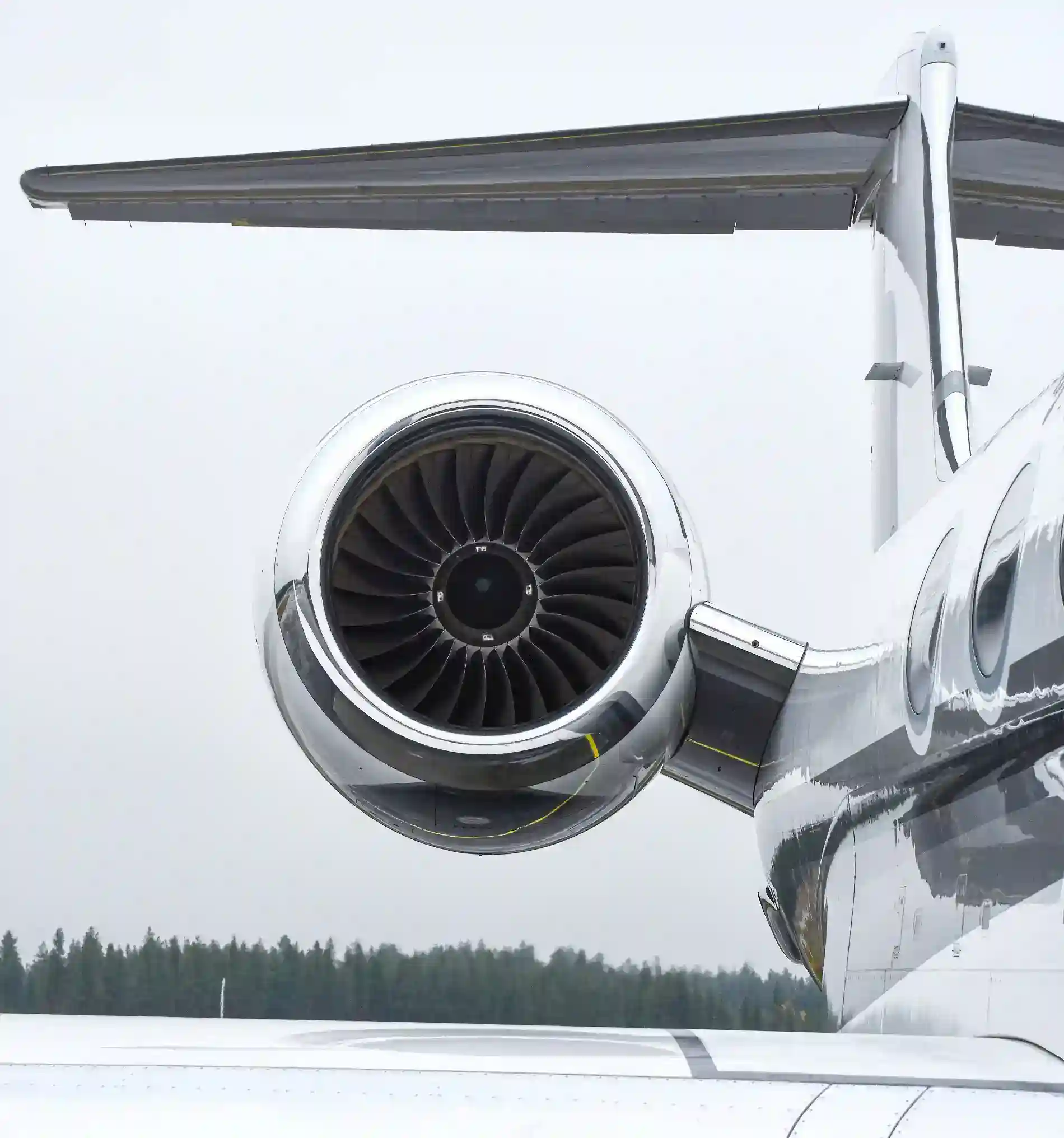
Private jets & business aviation · LBG
Discover →
La Défense · Roadshows · Executive hire
Discover →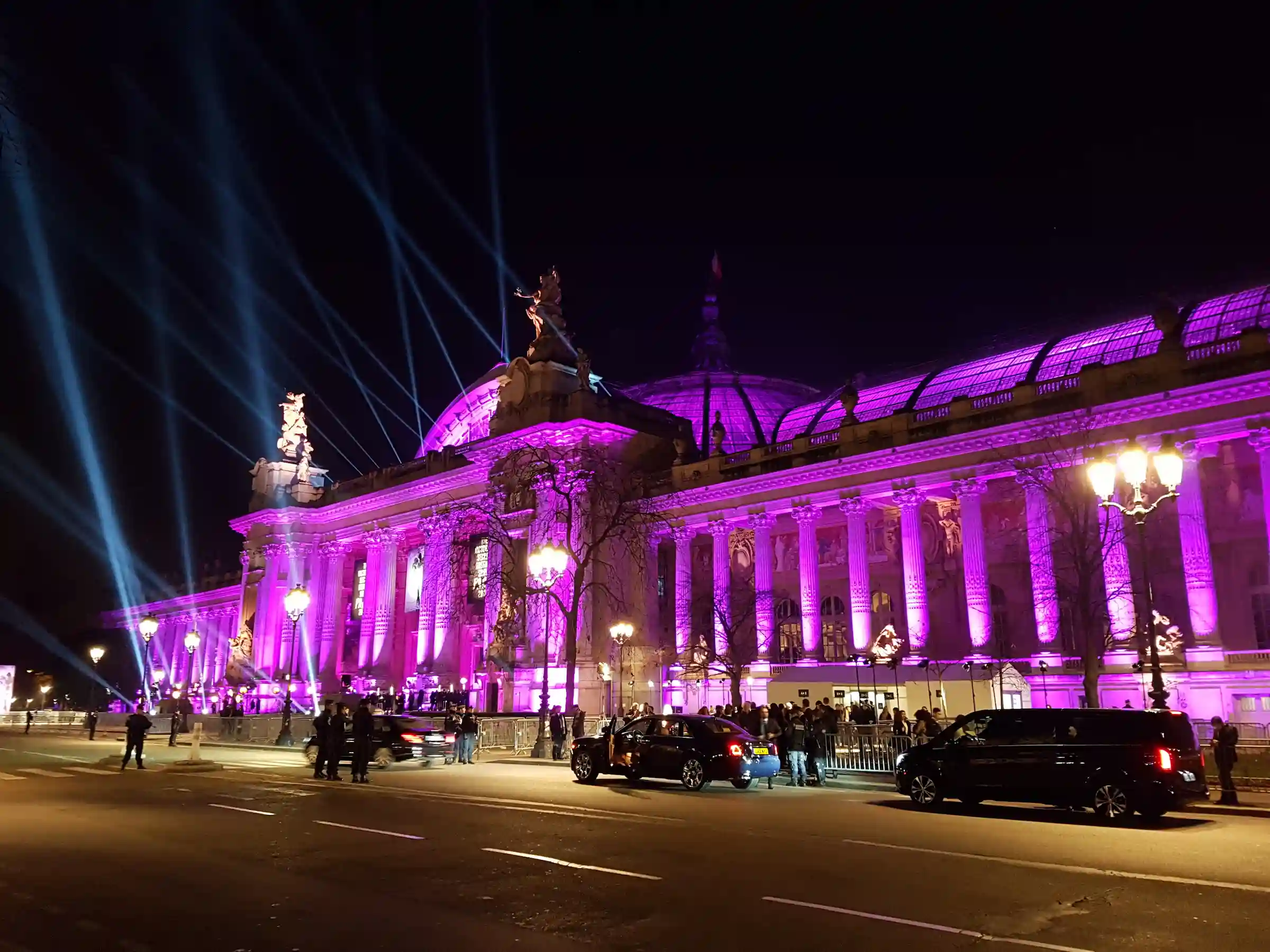
Fashion Week · Galas · Paris by night
Discover →
Champs-Élysées · Montaigne · Saint-Honoré
Discover →